STEM Subjects and Higher Education in the Age of AI
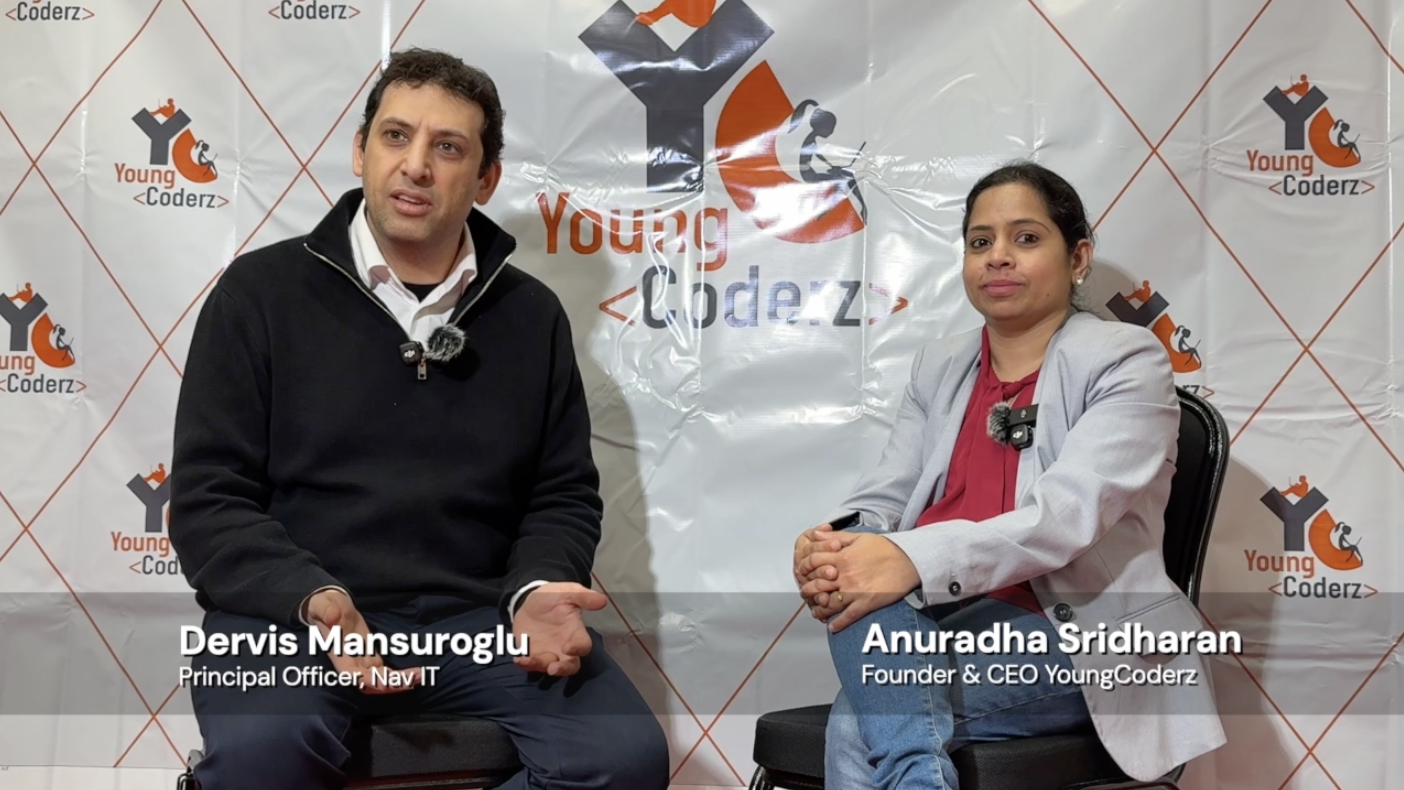
- 3 minsSTEM subjects and higher education are more important than ever in the time of AI. I therefore interviewed Anuradha Sridharan (Anu) from YoungCoderz shortly after recently having been a co-judge at the robotics and coding competition Sphero Global Challenge Norway. It is truly worth listening to the 12 minutes — because Anu has insights that are both deep and well-thought-out.
As both a technologist and an engineer, Anu shows what a passion for technology can create for children and young people. Among the many good points she talks about:
1. Technology is more than coding
Children should not learn technology solely so they can become developers. They should learn it because technology, more than ever, is a central part of everything we do. There are many more dimensions to technology beyond coding — there should be room for everyone.
2. Technology in the school curriculum
Schools should include technology in their curriculum as a natural part of the syllabus. This way, we prevent children from later viewing technology and coding as a fork in the road, and we avoid them thinking that you either become a developer or you don’t.
3. Technology and human collaboration
Technology should be about solving problems together with other people. Children’s collaborative abilities, team skills, and communication with other children and people are important, and it is essential that we inspire children with this from a very young age.
4. Technology and parents
Parents should participate in coding clubs and coding competitions — not just sit in the back row and wait until the children are finished. Parents acting as coaches have been shown to increase children’s motivation and enjoyment, and it gives them a greater sense of security.
5. Technology and AI
In an era of generative AI and vibe coding, you don’t become a developer just by learning Java or Python, nor by generating code. The ability to work and collaborate with people, and the ability to create human connections, is more important than coding alone.
6. Technology and problem-solving
We must also strengthen children’s abilities to solve difficult problems — their logical thinking, creativity, and design thinking. It is these qualities that create skilled developers and technologists — not coding skills alone.
7. Technology outside the classroom
We can achieve this by giving children fun and concrete problems to solve, and it must happen outside the classroom. When children get to organize themselves and their teams (for example, in the context of robotics and coding competitions), we strengthen their collaborative skills, planning skills, execution skills, and their technical abilities.
YoungCoderz is a coding club for children, young people, and their parents, organized in a number of Norwegian cities and areas. They are celebrating their 10th anniversary this year and are therefore a well-established group. They teach children and young people technology and coding through experimenting with tech, 3D, and programmable bots. This year, they organized the Norwegian edition of the international coding competition Sphero Global Challenge.